Acely vs The Princeton Review: Which SAT & ACT prep is right for you?

Princeton Review is a premium test prep solution, and the price reflects it. At $2,199 for their flagship SAT course and $420/hour for private tutoring, it's out of reach for most families. Acely gives you more practice tests, a personalized study plan, and an AI tutor for $588/year.

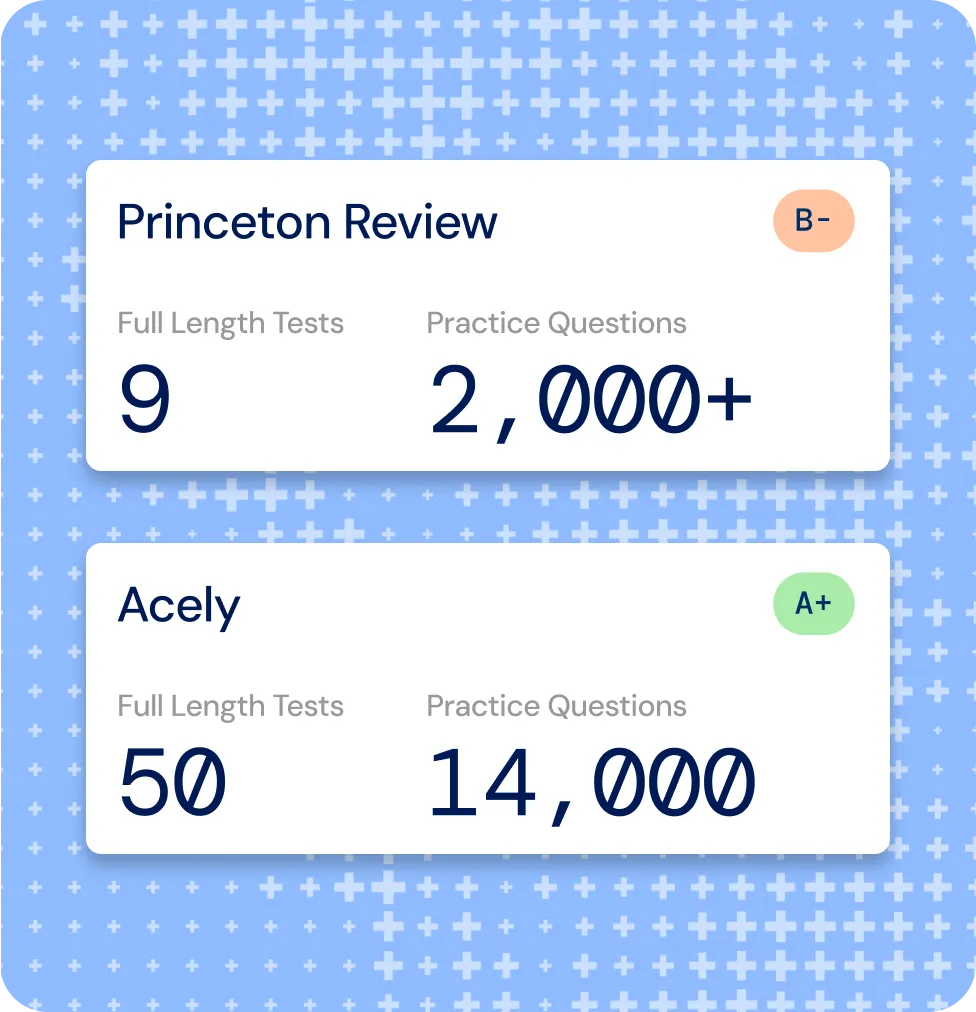
Acely vs Princeton Review comparison showing practice tests and questions

Quick verdict

Princeton Review is one of the most known names in test prep, and their live instruction is genuinely good. But at $2,199 for their flagship SAT course and $420/hour for tutoring, most families are priced out before they start. Acely offers 30 SAT tests, 20 ACT tests, a personalized study plan, and an AI tutor for $588/year. Everything you need to hit your target score, at a price that's actually accessible.

Feature comparison

Compare Acely to The Princeton Review to see how they stack up.

Feature

Acely
Princeton Review

SAT practice tests

30 full-length tests

5 (self-paced) / ~9 (1400+ Course)

ACT practice tests

20 full-length tests

Varies by course

SAT practice questions

9,000 expert-created

Thousands (exact count varies)

Personalized study plan

Yes, auto-updates

Yes, structured course path

AI tutor

Yes, SAT/ACT focused

Not prominently featured

Performance dashboard

Yes, automated tracking

Score analysis (limited)

Money-back guarantee

Yes

Select programs only

Self-paced price

$588/year (30 tests)

$299 (5 tests only)

Flagship course price

$588/year (all incl.)

$2,199 (SAT 1400+ Course)

Tutoring

Not offered

$420/hour

Head-to-head: Acely vs The Princeton Review

A closer look at the areas that matter most for test prep.

Practice content

Acely’s 30 full-length digital SAT practice tests significantly outnumber Princeton Review’s options. The self-paced course includes only 5 tests, and the flagship SAT 1400+ Course includes approximately 9. Acely’s 9,000 SAT questions and 5,000 ACT questions provide far more practice volume. Princeton Review describes its question bank as “thousands of questions,” but the exact count varies by course tier.


Personalization and adaptivity

Both platforms offer personalized study plans, but they take different approaches. Princeton Review’s plan is based on a structured course path. Students follow a defined curriculum with dashboards and score analysis at each checkpoint. Acely’s plan is fully adaptive: it updates automatically after every practice session, focusing each student on the highest-impact topics based on their actual performance data.


AI and technology

Princeton Review’s focus is on human-based instruction. AI tools are not prominently featured, with the emphasis remaining on instructor-led learning and metrics-driven dashboards. Acely’s entire platform is built around personalization and a tech-forward approach, with a test-focused AI tutor available 24/7 across all subscription plans at no additional cost.


Live instruction

This is a genuine advantage for Princeton Review. Students who want live instruction from expert tutors, either in group courses or one-on-one sessions, will find Princeton Review a better fit. Acely does not offer live instruction directly, but many independent tutors use Acely with their students, and families can find a tutor through Acely’s Partner Directory. Acely’s strength is in self-directed, personalized prep that delivers targeted guidance without the scheduling constraints or cost of live tutoring ($420/hour).


Price

Acely’s annual plan costs $588 ($49/month) and includes all features: 50 practice tests, 14,000+ questions, an adaptive study plan, AI tutor, and performance dashboard. Princeton Review’s self-paced SAT course starts at $299 but includes only 5 practice tests, and its flagship SAT 1400+ Course is $2,199. Private tutoring runs $420/hour. For students seeking comprehensive, personalized prep at a predictable cost, Acely delivers far more content and adaptivity for a fraction of the price.

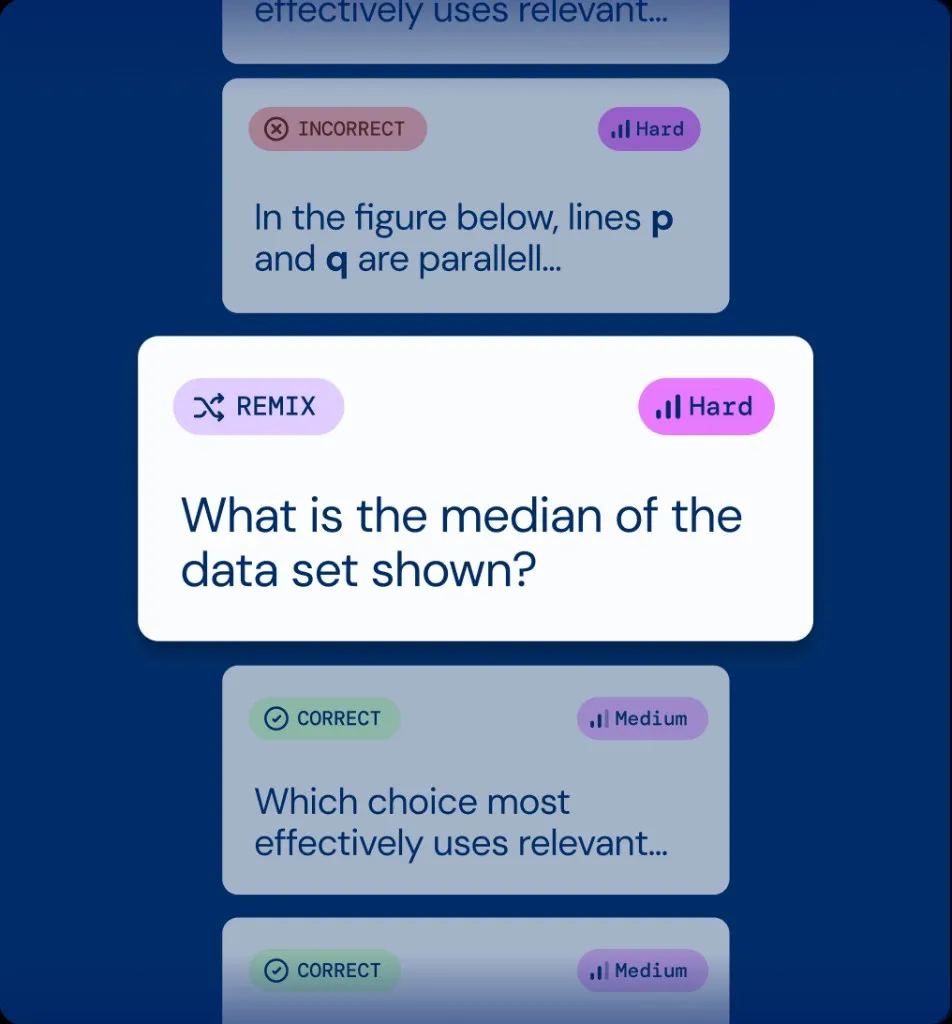
Acely app showing practice questions with difficulty levels and remix options

Why students choose Acely over Princeton Review

Premium results without the premium price tag

  • 3x more full-length SAT practice tests

    30 tests vs ~9 in the Princeton Review 1400+ Course, with detailed pacing insights after each one

  • Purpose-built AI tutor available 24/7

    No scheduling required. Help on-demand, focused only on SAT and ACT topics

  • Adaptive study plan that auto-updates each session

    Not a fixed course path. Your plan evolves based on your actual performance data

  • Full ACT prep included, 20 tests and 5,000 questions

    Automated scoring and progress tracking as an official ACT partner

  • $588/year vs $2,199 for equivalent content

    Everything Acely offers for under the cost of a single tutoring session at Princeton Review’s $420/hr rate

  • 3-day free trial

    Princeton Review’s free option is a single practice test

What students say

Real results from students who chose flexible, affordable prep over premium pricing.

SAT +120 pts

We tried a private tutor first. Acely worked far better.

We paid several hundred dollars for a week-long class with a private tutor and my son’s score went up a little. Several months later, we started using Acely and his SAT went up 120 points. I wish we would have started with this his junior year. Great program!

Beth, Parent

Switched from Princeton

Acely is better than those in every single way.

I have used many other self-led programs like Magoosh, Kaplan, Princeton, etc but it was nothing in comparison to Acely. Acely is better than those in every single way. Whether it is the UI or the quality of the questions. Acely also had the most number of questions. Acely is for sure in my top list.

Raghav, Acely SAT Student

Pricing comparison

Acely delivers more tests and full personalization for less than the cost of one hour of Princeton Review tutoring.

Acely

$49/mo

Billed annually ($588/year). Or $149/month, $99/month billed quarterly.

Self-paced (30 SAT tests)

$588/year

SAT Essentials

$149/month

SAT + ACT (all incl.)

$588/year

AI tutor

Included, all plans

Money-back guarantee

Yes

1-on-1 tutoring

Not offered

Free trial

3 days

Start your free trial

Princeton Review

$299 to $2,199+

Self-paced from $299 (5 tests). Flagship SAT 1400+ Course at $2,199. Tutoring at $420/hr.

Self-Paced SAT (5 tests)

$299

SAT Essentials Course

$949 (18 hrs live instruction)

SAT 1400+ Course

$2,199

AI tutor

Not prominently featured

Money-back guarantee

Select programs only

1-on-1 tutoring

$420/hour

Free trial

Free practice test only

Ready to improve your SAT or ACT score?

Start your free 3-day trial of Acely

Try for free

Frequently asked questions

Common questions about Acely vs The Princeton Review.

Yes. Acely's annual plan is $588 ($49/month) and includes all features. Princeton Review's self-paced SAT course starts at $299 but includes only 5 practice tests; its flagship SAT 1400+ Course is $2,199; and private tutoring runs $420/hour. Acely provides significantly more practice content (30 vs 5 tests) and full personalization for a fraction of the price.

Acely has more. Acely offers 30 full-length digital SAT practice tests plus 20 ACT practice tests. Princeton Review's standard courses include approximately 9 full-length SAT practice tests in the flagship course, and only 5 in the self-paced plan.

Princeton Review's platform focuses on human-based instruction, dashboards, and video lessons. AI tutoring is not a prominently featured component of their current SAT or ACT prep offering. Acely's AI tutor is built into every plan and is available 24/7, focused exclusively on SAT and ACT topics.

Yes, Princeton Review offers a score improvement guarantee on select programs (eligibility requirements apply). Acely also offers a score improvement guarantee: if you meet all eligibility requirements and your score does not increase by 200+ points on the SAT or 5+ points on the ACT, Acely will refund 100% of the subscription fees paid during the qualifying period.

Princeton Review is a strong fit for students who benefit from live, instructor-led group classes or one-on-one tutoring. Its brand reputation and course-based structure also appeal to students and parents who prefer a traditional educational framework.