Ace the AP® English Literature exam with expert-created questions
Acely's extensive question bank for the AP English Literature & Composition multiple choice section gives students the targeted practice to get a 5 on test day.
AI tutor with hints and explanations
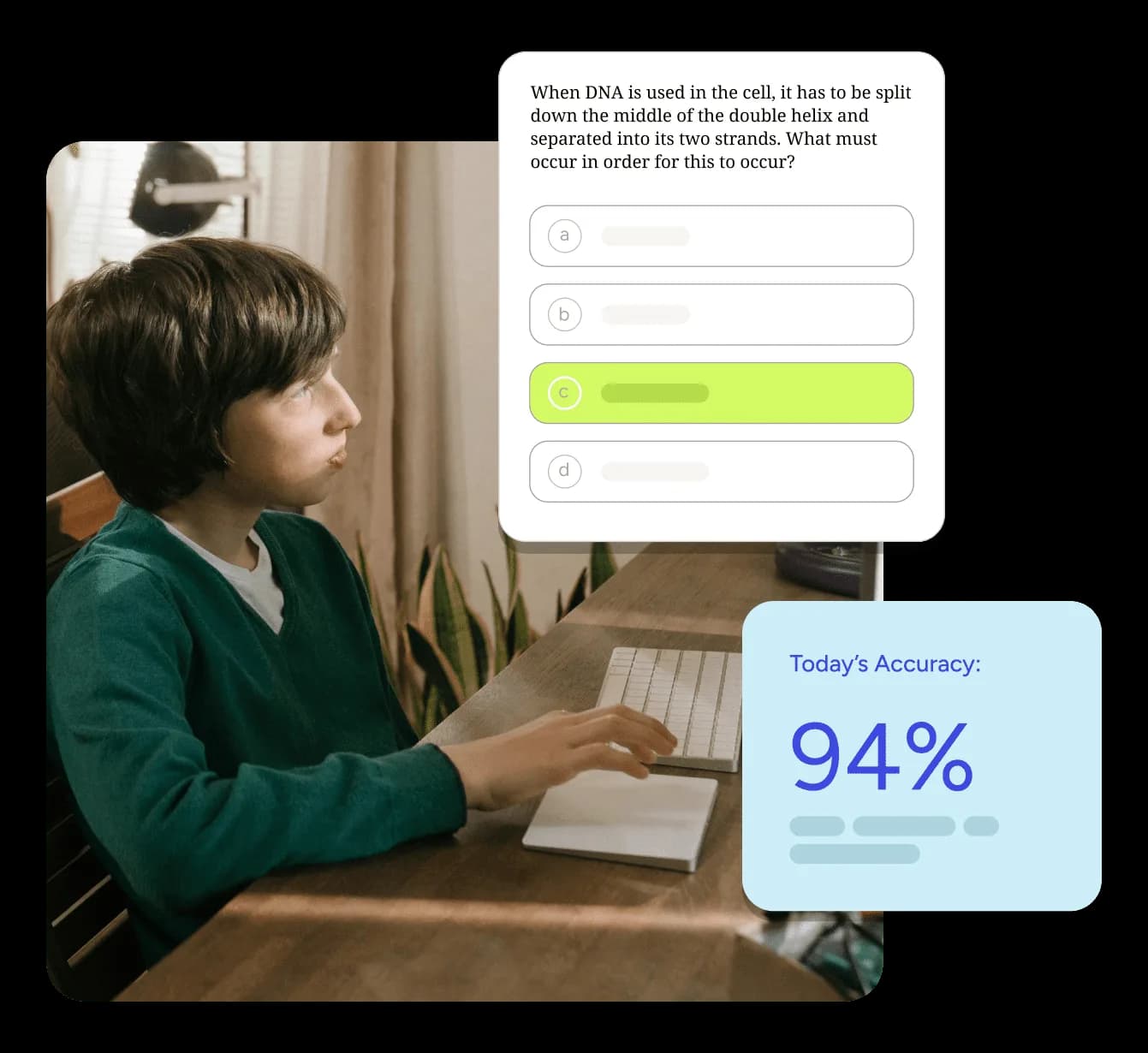
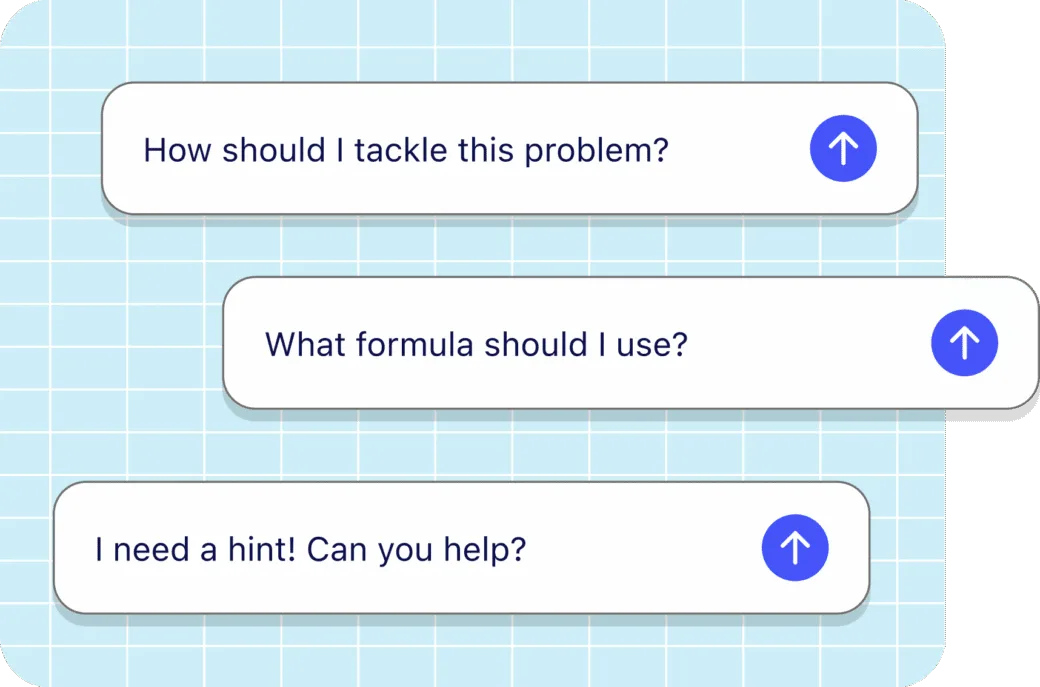
Get in-depth explanations for every practice question and ask the AI tutor for hints and more. Ask for summaries of literary works or other questions about specific exam questions.
Track your progress before test day
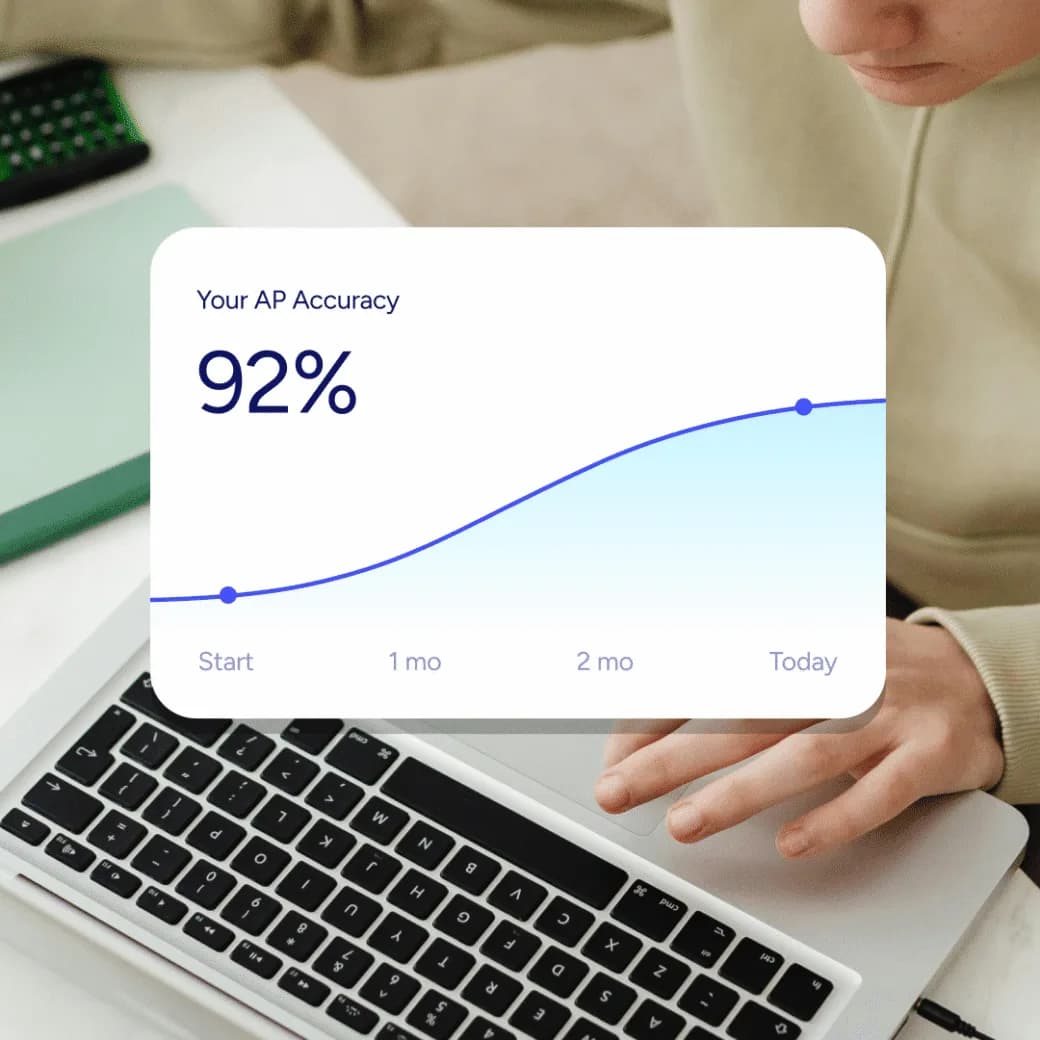
Track your AP English Literature performance on exam questions as you study, making sure you're ready for test day. The MCQs are worth 45% of your total grade.
Preparing for the 2026 digital AP® English Literature exam
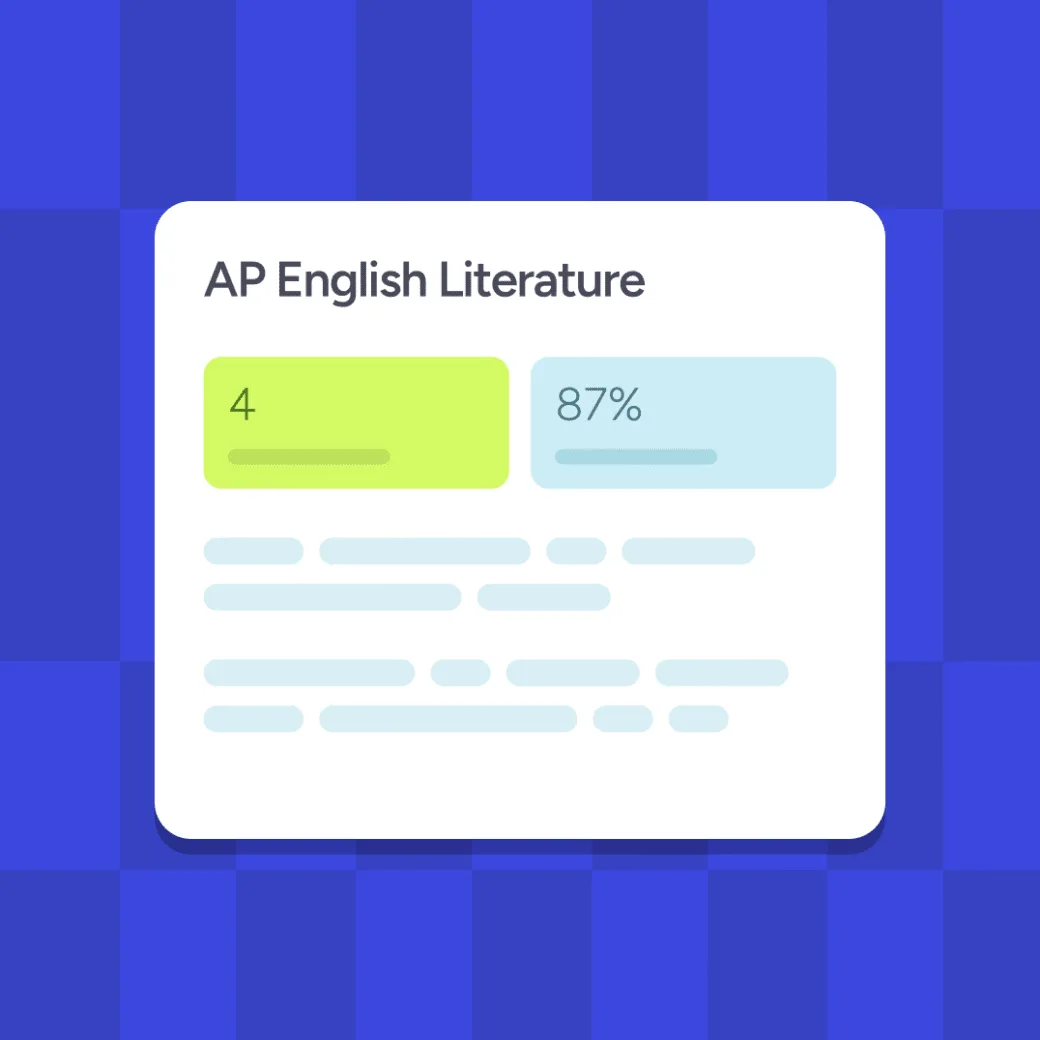
The 2026 AP Lit exam is fully digital, requiring students to engage with complex texts through the Bluebook™ app. To score a 5, students must go beyond simple summaries and master the literary analysis skills required for both the multiple-choice section and the three free-response questions. Acely's platform offers practice tests and exam questions that drill the essential skills needed for the composition exam:
- Defensible interpretation: Learn to move past plot summary to craft a defensible interpretation of a text, establishing a clear line of reasoning supported by textual evidence.
- Analysis of form & function:Practice identifying how an author's use of literary devices—such as imagery, syntax, and tone—contribute to the overall thematic meaning of a work.
- Digital test strategies: Practice with a digital interface to prepare for the fast-paced 55-question multiple-choice section.
Master AP English Lit practice questions for every unit
The AP English Literature and Composition exam is structured into nine units that cycle through short fiction, poetry, and longer drama or novels. Use our unit-specific practice questions to master the literary skills required for a 5 on test day.
Unit 1: Short Fiction I
Analyze character development, narrative perspective, and the function of setting in foundational short stories.
Unit 2: Poetry I
Master the basics of figurative language, imagery, and structure in introductory poetic works.
Unit 3: Longer Fiction or Drama I
Explore characterization and authorial intent in full-length novels or plays.
Unit 4: Short Fiction II
Deepen your analysis of textual complexity and subtext in nuanced short stories.
Unit 5: Poetry II
Practice comparative poetry analysis, focusing on how structure and tone convey meaning across different styles.
Unit 6: Longer Fiction or Drama II
Examine thematic significance, motifs, and plot development in complex literary works.
Unit 7: Short Fiction III
Apply literary theories and evaluate short fiction through multiple interpretive perspectives.
Unit 8: Poetry III
Tackle advanced poetry analysis, emphasizing intertextuality and cultural context.
Unit 9: Longer Fiction or Drama III
Synthesize skills to form well-developed interpretations of complex, multi-layered literary texts.
Acely pricing
Acely includes access to APs, SAT, ACT and PSAT.
No charge today • Cancel anytime • Score improvement guarantee
Start my 3-day free trialStart early. Boost confidence by May.
FAQs
Get more insights on Acely's AP English Literature product.
Mastering AP English Literature and Composition exam questions in the multiple-choice section builds the exact analytical "muscles" required to write a high-scoring literary analysis for the free-response questions (FRQs). While the formats differ, the core skills of evidence-gathering and interpretation are identical.
- Identifying Evidence: High-quality multiple-choice section practice trains you to find the "active" parts of a text—the specific literary devices and shifts that you later use as textual evidence in your free-response questions.
- Developing a Defensible Interpretation: Every correct MCQ answer is essentially a micro-defensible interpretation. By practicing with our exam questions, you learn to distinguish between a simple summary and a complex claim about the "meaning of the work as a whole".
- Decoding Authorial Intent: Practicing with various prose and poetry passages helps you quickly identify authorial intent, which is the foundation for the "Commentary" points on the composition exam rubrics.
- Speed and Fluency: Building speed on the 55 multiple-choice questions ensures you have the mental stamina and "literary vocabulary" to tackle three free-response essays with confidence.
Effective poetry practice requires analyzing the function of figurative language, imagery, and structure. Focus on identifying the "shift" in tone or perspective. Our Unit 2, 5, and 8 practice questions are specifically designed to help you decode unfamiliar poems by looking for metaphor, allusion, and syntax.
For the student-choice essay, it is best to know 3–4 complex works deeply. Frequently cited "high-utility" books include Hamlet, The Great Gatsby, Invisible Man, Frankenstein, and Beloved. Our unit-specific practice focuses on the characterization and thematic significance found in these classic and contemporary works.
The multiple-choice section consists of 55 questions to be completed in 60 minutes, accounting for 45% of your total exam score. Starting in 2025, each question features four answer choices instead of five. Our practice questions reflect this updated format to help you master time management and process of elimination.
To prepare for the 2026 digital AP® English Literature or AP® English Language exam, you must transition from paper-based study to a digital-first workflow. Because these exams are now administered via the College Board Bluebook™ app, your practice should mimic that environment.
- Master the Bluebook™ Tools: Download the official Bluebook app to take a "Test Preview." Practice using the digital annotation, highlighting, and "strike-through" tools, as these are the only interface options you will have on exam day.
- Drill Stimulus-Based MCQs with AI: Section I (Multiple Choice) accounts for 45% of your total score. Use an AI-powered tool like Acely to practice stimulus-based questions. Unlike static PDFs, AI provides instant feedback on literary devices and authorial intent, helping you understand the "why" behind every answer.
- Simulate On-Screen Reading: The digital exam requires reading 550–700-word prose passages and complex poetry on a screen. Practice active reading by identifying narrative structures and tone without the ability to physically circle text.
- Timed Digital Essay Writing: Section II (Free Response) is 55% of your score. Practice typing your essays in a plain-text environment without spell-check or grammar-correction tools to build the "digital stamina" required for the 2-hour writing window.
- Review in AP Classroom: Utilize the "Question Bank" in your College Board account. Ask your teacher to unlock personal progress checks to see how your digital performance stacks up against the official rubrics.
- Use our AP English Literature and Composition Guide.